China Travel Guide
Best Time to Visit China: When to Go and Which Months to Avoid
April and October are the best months to explore China. But the country is so big that the ideal time changes by region, and there are a few holidays you'll want to steer clear of. Here's what to expect month by month.
By @mesapara1. I traveled through China in April 2026 and created this article and guide to share what I learned planning the trip independently.
Last updated: October 11, 2026
There's no perfect month to visit China
China is a huge country, and the weather varies dramatically from one region to another. While one part of the country might have perfect sightseeing weather, another could be experiencing freezing temperatures or heavy rain.
That's why there's no single perfect time to visit all of China.
But if you're planning your first trip and want to explore several cities, choosing the right month can make a huge difference. Spring and fall are generally considered the best seasons to visit, and for good reason: temperatures are more comfortable, and you're less likely to have your plans disrupted by extreme heat or heavy rain.
What's the best season to visit China?
Spring and fall are the best seasons to travel to China, especially if you're planning to visit different regions.
During winter, from December to February, much of northern China experiences below-freezing temperatures. In cities like Harbin, temperatures can drop below -20°C (-4°F). Southern China is considerably milder, although the cold often comes with high humidity.
Summer is the opposite. Between June and August, temperatures in many cities climb above 35°C (95°F), and the humidity makes it feel even hotter. Chongqing and Chengdu are particularly hot. In fact, Chongqing is known as one of China's furnace cities.
Then there's China's rainy season, which affects much of the country between May and September, although the timing varies by region. Heavy rainfall and cloudy skies become more common, which can be particularly frustrating when visiting national parks and mountain destinations.
Spring and fall, on the other hand, generally offer milder temperatures, less rain, and better conditions for sightseeing.
China weather by month
If you've already chosen your travel dates and want an idea of what to expect, this table is a good starting point:
| Month | Avg. high | Rainfall | My take |
|---|---|---|---|
| January | 1–8°C (34–46°F) | Low | Very cold in northern China |
| February | 6–9°C (43–48°F) | Low | Cold, with Chinese New Year possibly falling this month |
| March | 12–13°C (54–55°F) | Occasional | Decent, but still chilly |
| April | 19–20°C (66–68°F) | Occasional | One of the best months |
| May | 24–26°C (75–79°F) | Occasional | Good weather, but watch out for the May 1 holiday |
| June | 27–30°C (81–86°F) | Frequent | Heat and humidity start building |
| July | 31°C (88°F) | Frequent | Best avoided due to heat and rain |
| August | 30–31°C (86–88°F) | Frequent | Hot, humid, and rainy |
| September | 26–27°C (79–81°F) | Moderate | A good month to visit |
| October | 18–22°C (64–72°F) | Low | My top choice, outside Golden Week |
| November | 10–17°C (50–63°F) | Low | Good, but getting cooler |
| December | 3–11°C (37–52°F) | Low | Cold in northern China |
These temperatures are approximate and reflect conditions in cities such as Beijing, Xi'an, Shanghai, Chengdu, and Chongqing. They don't represent the weather across the entire country, especially in mountainous regions.
What's the best month to visit China?
If you've been researching when to visit China, you've probably seen the same advice everywhere: go in spring or fall. What most articles don't explain is how much the experience can vary depending on which regions you plan to visit.
For a first trip covering several cities, April and October are two of the best months to visit China. Temperatures are generally comfortable, rainfall is lower than in summer, and the weather is well suited to exploring.
Between the two, I'd choose October. The weather tends to be more stable, with a lower chance of rain. There's one important exception, though: I'd completely avoid the first week of October, when China's Golden Week holiday brings huge crowds to popular destinations.
If you have a preference when it comes to temperatures, I'd narrow it down like this: if you enjoy warmer weather, April, May, September, and October are good choices. If you prefer cooler temperatures, consider March, April, October, and November.
Visiting China in April: Beijing, Shanghai, and other cities
I traveled to China in April, and overall, I thought it was an excellent time to visit.
One thing worth knowing is that rain in April isn't the same as traveling during the rainy season. In the cities, I mostly experienced light showers or brief periods of rain that didn't stop me from exploring.
Here's what the weather was like during my trip:
- Beijing: fantastic if you enjoy cooler weather. Mornings were cold, but daytime temperatures were perfect for walking around, which is exactly what you'll be doing a lot of in Beijing.
- Shanghai: really pleasant weather. It rained on one of my three days there, but it was mostly light drizzle and didn't interfere much with my plans.
- Chengdu: the weather was lovely here too. It rained on my first and last days, but only in the afternoon, and it didn't ruin either day.
- Chongqing: the warmest city on my itinerary, although the heat was never uncomfortable.
- Xi'an: similar to Beijing, with mild temperatures and relatively little rain in April.
- Hunan (Zhangjiajie and Tianmen Mountain): this was a different story. It rained all three days, and because it's a mountainous region, the weather had a much bigger impact on what I could see.
In major cities, a rainy day doesn't have to ruin your itinerary. You can rearrange your plans and visit museums, indoor markets, or other covered attractions instead.
The tricky part is planning an itinerary flexible enough to handle bad weather. Some activities are easy to move around, while others aren't. In my China travel guide, I've included a complete two-week itinerary with indoor alternatives for each city.
Zhangjiajie weather: why visibility matters so much
In Hunan's mountainous areas, especially Zhangjiajie and Tianmen Mountain, the weather matters much more than it does in the cities.
The biggest issue isn't necessarily rain. It's fog and poor visibility. When you're visiting a viewpoint specifically to see the mountains, finding everything completely hidden behind clouds can change the experience.
April is generally a good time to visit the region, but the weather can be unpredictable. You might get beautiful clear skies or several days of rain and fog.
It rained during all three days of my visit. A friend had been there exactly one week earlier and had sunny weather. Same destination, same month, just seven days apart.
There's also an important difference between the two parks.
Tianmen Mountain: if it's raining, I probably wouldn't recommend going up. Because of the shape of the mountain, fog tends to build up fast, and the upper part can end up completely covered in clouds, blocking the views from the walkways and cliffside paths. You might even struggle to see Heaven's Gate itself.
Zhangjiajie National Forest Park: I'd be more flexible here. The park is enormous, with viewpoints spread across different areas. Even if some are covered in clouds, you might still get good visibility elsewhere. For me, seeing those towering sandstone pillars from just a couple of viewpoints makes the visit worthwhile, so I wouldn't cancel simply because the forecast calls for rain.
My advice is to keep your expectations realistic and, if possible, leave some flexibility in your itinerary to adjust your plans based on the weather.
Zhangjiajie also has another challenge: it's a surprisingly confusing park to navigate, with multiple entrances, routes, and internal transportation options. In my guide, I explain how to navigate the park, choose the right route, and adjust your plans if the weather doesn't cooperate.
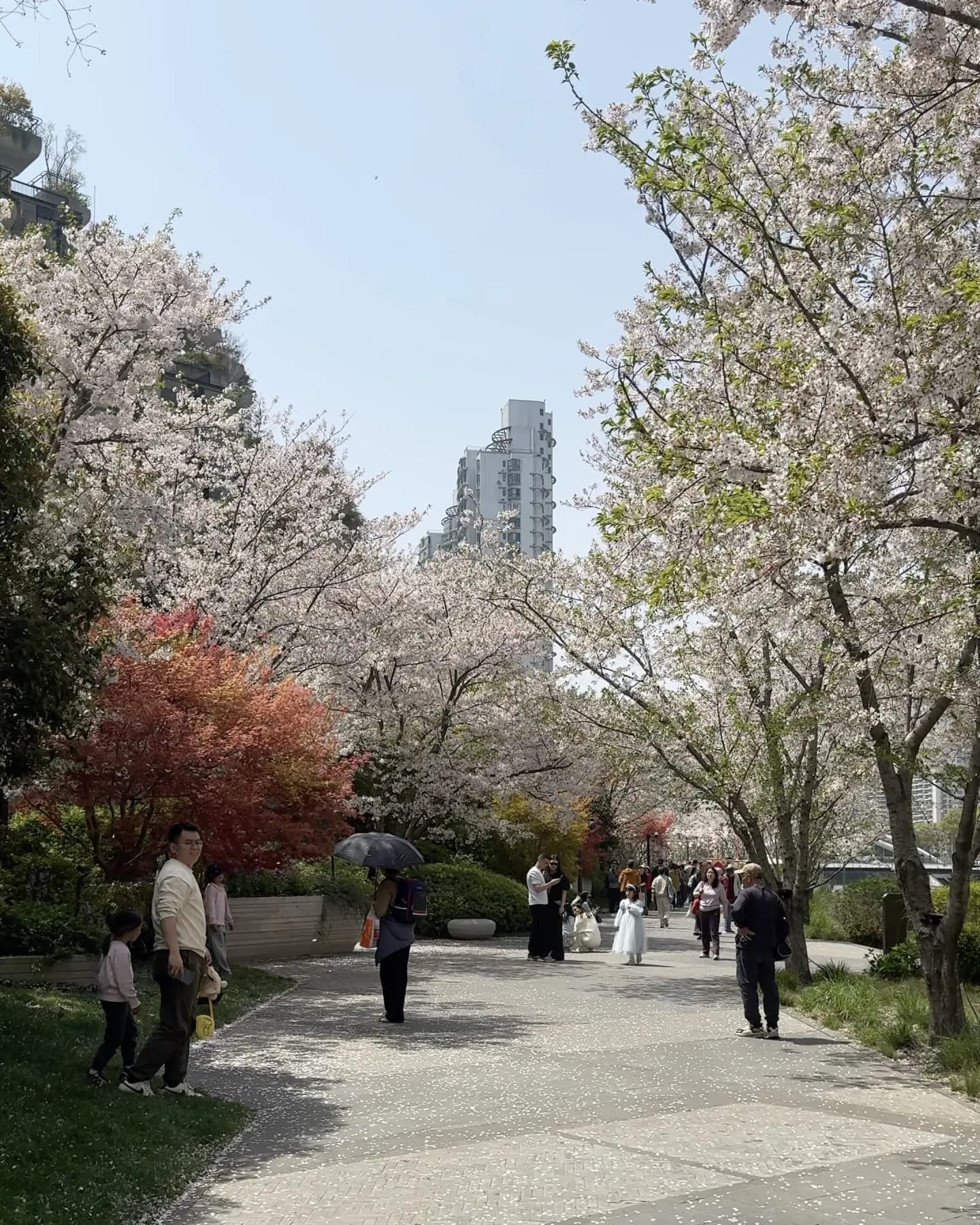
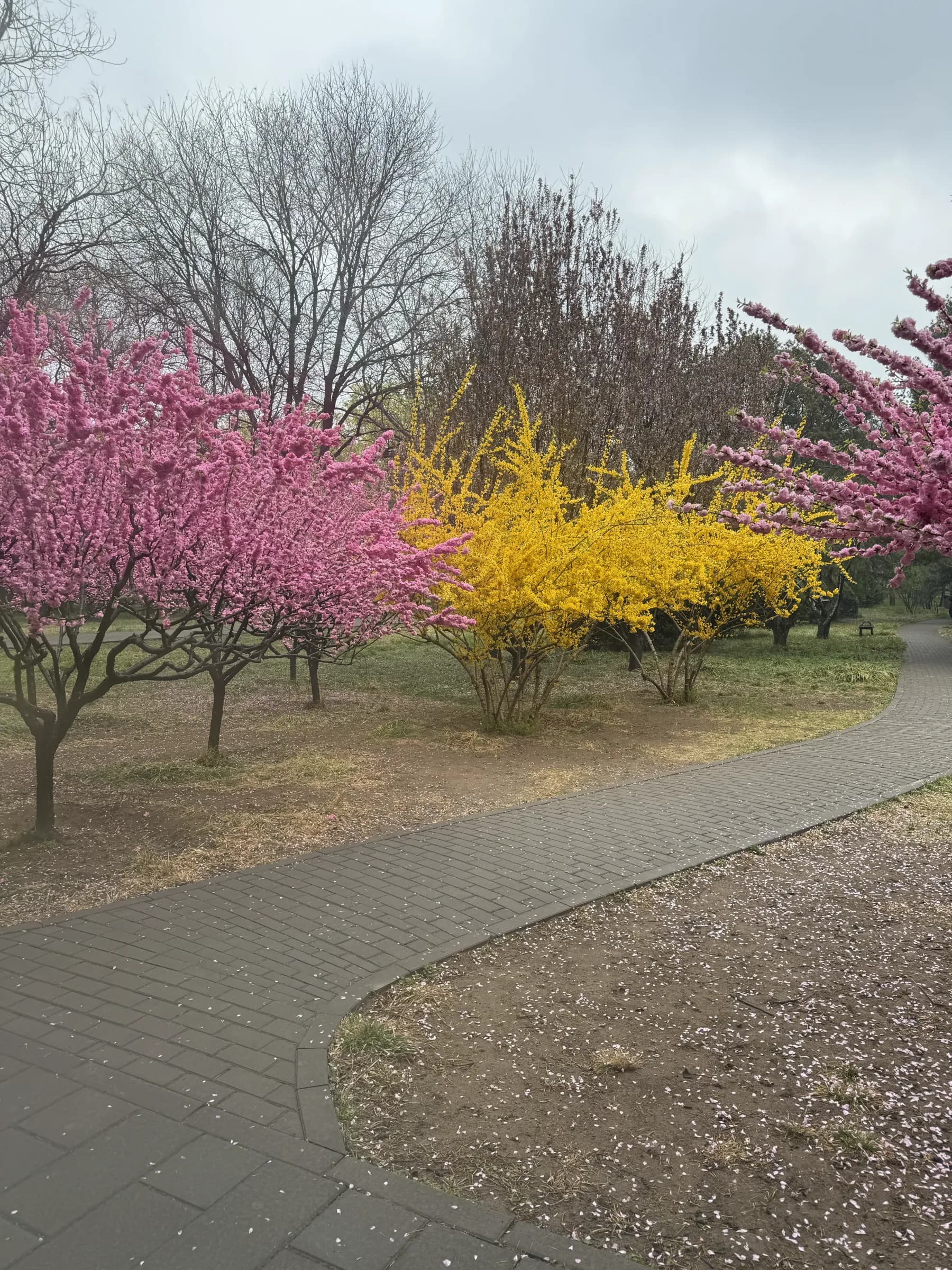
Cherry blossoms in China: one reason to visit in April
October may have more reliable weather, but April has something special: cherry blossoms.
Most people associate cherry blossom season with Japan, but China also has some beautiful places to see them.
One interesting difference is that China is so large, with such varied climates, that cherry blossoms don't bloom at the same time everywhere. This gives you a wider range of opportunities to see them during a trip, although the exact timing still depends on the destination and the weather that year.
I saw cherry blossoms in both Shanghai and Beijing, with pink flowering trees scattered throughout the cities.
Traveling to China is also generally much more affordable than planning a trip to Japan during peak sakura season.
Dates to avoid when visiting China
Beyond the weather, there's something that can have an even bigger impact on your trip: China's public holidays.
Domestic tourism in China is enormous, and during major holidays, millions of people travel at the same time. That means crowded attractions, higher hotel prices, and much greater demand for trains and flights.
There are three holiday periods I'd try to avoid.
Chinese New Year
Chinese New Year, also known as Lunar New Year or Spring Festival, falls in late January or February. The exact date changes every year because it follows the lunar calendar.
It's one of the busiest travel periods in the world. Millions of people travel across China to spend the holiday with their families, creating enormous demand for transportation.
Golden Week in China
Golden Week is the national holiday period that begins on October 1, celebrating China's National Day.
It's one of the worst times of the year to visit the country's most popular tourist attractions. Major destinations receive enormous numbers of visitors, and finding accommodation or transportation can become much more difficult.
That's why, even though October is my favorite month for the weather, I'd avoid traveling during the first week. If you're planning to visit China in October, I'd aim for the second half of the month.
Labor Day holiday
China's Labor Day holiday, centered around May 1, also creates several days of vacation and a major increase in domestic travel.
Although the holiday period is generally shorter than the other two, it can still affect the availability of trains, hotels, and tickets to popular attractions.
Why do China's public holidays matter so much?
Because the biggest problem isn't just higher prices. It's the crowds.
During these holidays, train tickets can sell out well in advance, major attractions become packed, and lines can be incredibly long.
To give you an idea, the photo below was taken in Shanghai during a regular long weekend in April. And that wasn't even one of China's major national holiday periods.
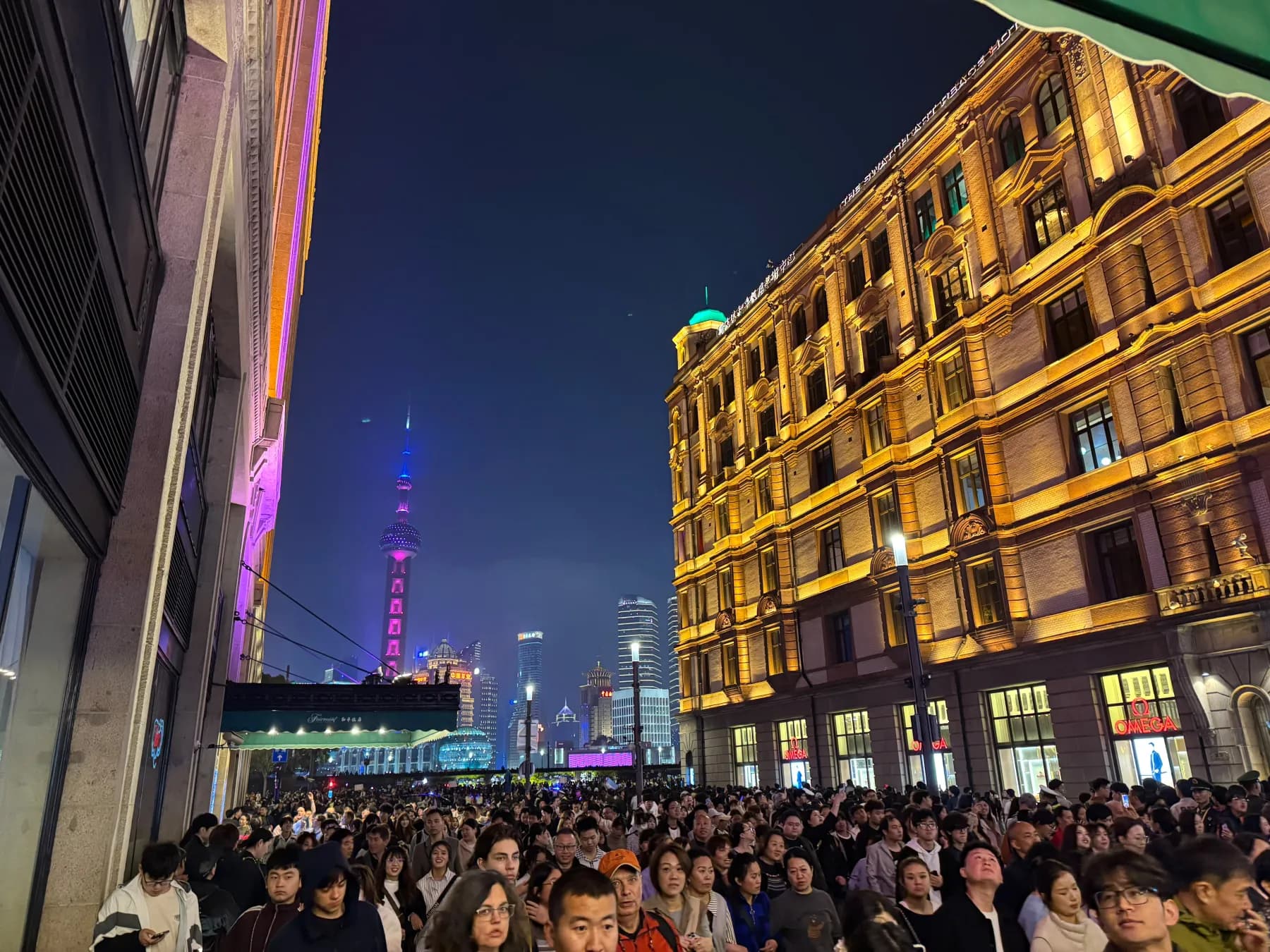
If your travel dates overlap with one of these holidays, you can still visit China, but you'll need to plan differently. In my guide, I cover how far ahead to book trains and hotels, and how to adjust your itinerary to avoid the busiest days.
Can you visit China in summer or winter?
Absolutely. Just because spring and fall are the best seasons for a multi-city itinerary doesn't mean you can't visit during the rest of the year.
China is so large that there are always some regions with better conditions than others.
As a general rule, I'd avoid northern China in winter unless you're specifically interested in snowy landscapes. In summer, I'd try to stay away from the hottest and most humid cities in the south.
For example, Harbin is one of the most interesting places to visit in China in winter thanks to its famous Ice and Snow Festival, although temperatures can be extremely cold.
If you're planning to visit China in summer, I'd consider different regions. Xinjiang is a good option in June, before school vacations begin and domestic tourism increases. The Ili River Valley is especially green between June and August, with temperatures that can range around 20–30°C (68–86°F). And Jiuzhaigou, in northern Sichuan, is another alternative if you want to escape the heat of China's major cities. Summer temperatures are around 20°C (68°F), and the lakes and waterfalls are particularly beautiful at this time of year.
The idea is simple: if you can't choose your travel dates, choose your destinations based on the season. There's little point in forcing a north-to-south itinerary in the middle of summer if you already know you'll encounter extreme heat and heavy rain across much of the route.
The China Travel Guide
Choosing when to go is just the first step—the rest is in the guide
Then comes figuring out which cities to visit, what order makes the most sense, how many days to spend in each place, and what to do when the weather doesn't cooperate. I put all that planning into my complete China travel guide, with a day-by-day two-week itinerary, city recommendations, transportation details, and backup plans for rainy days.

- Day-by-day 2-week itinerary
- Apps, payments and internet set up before you travel
- Everything checked in person, not copied from the internet
Frequently Asked Questions
- When is the best time to visit China?
- April and October are two of the best months for a first trip covering several regions. October generally has more stable weather, as long as you avoid Golden Week.
- What's the worst time to visit China?
- For a multi-city itinerary, July and August are the months I'd recommend the least because of the heat, humidity, and frequent rain. I'd also avoid major national holidays, especially Chinese New Year and Golden Week.
- When is peak tourist season in China?
- China's busiest travel periods are major national holidays and the school summer vacation season in July and August. Demand for hotels, trains, and attraction tickets increases significantly during these periods.
- Can you see cherry blossoms in China?
- Yes. Cherry blossoms can be found in several regions during spring, including Beijing and Shanghai. April can be a good month to see them, although the exact blooming dates vary by city and year.
- Does it rain a lot in China?
- It depends heavily on the region and time of year. During my April trip, I experienced light rain in Shanghai and Chengdu, while it rained all three days I spent in Zhangjiajie. In mountainous areas, fog can also significantly reduce visibility.